Onboarding New Retail Staff: Building the Right Habits from Day One
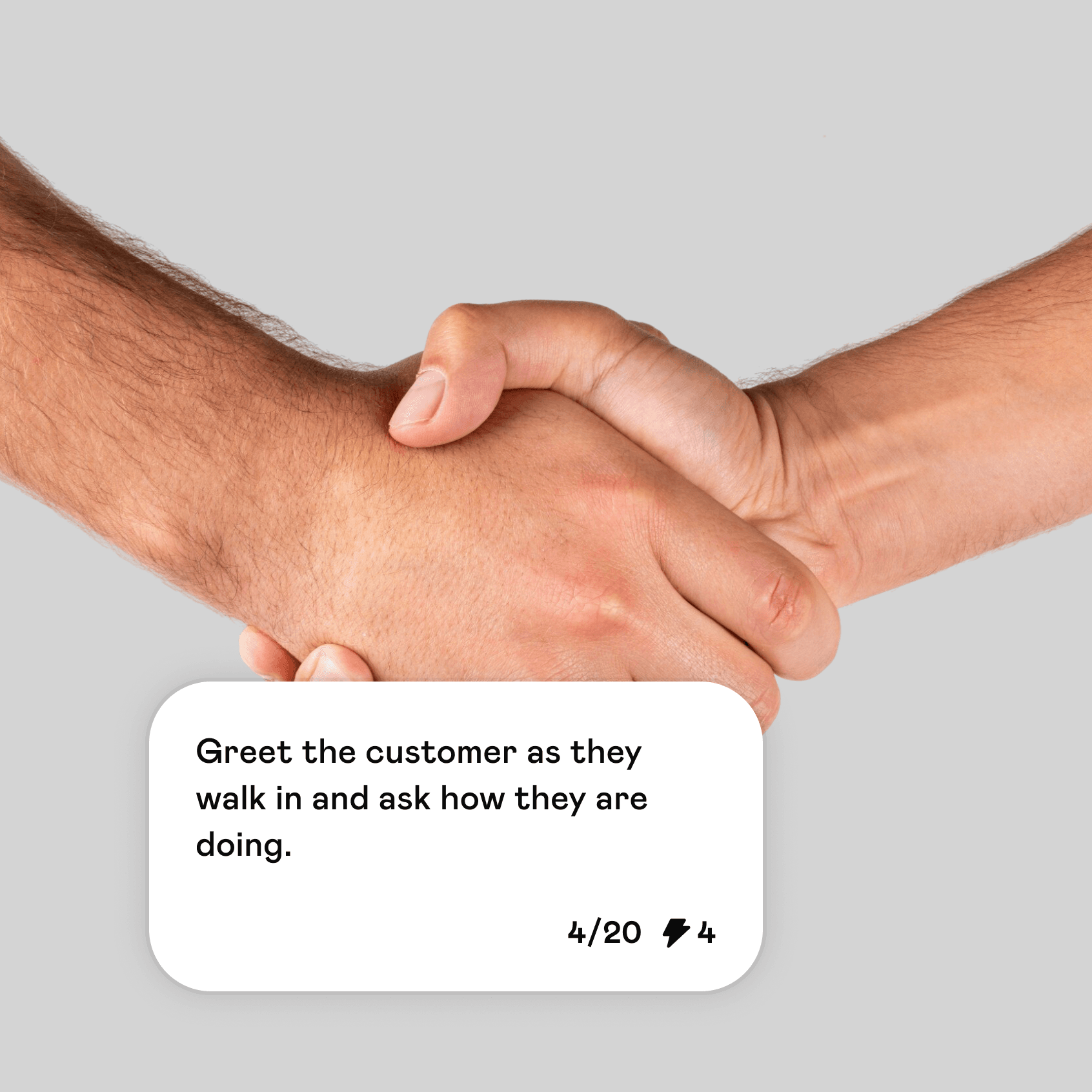
Most onboarding programs in retail start with the same three things: routines, product knowledge and brand introductions. All useful, all necessary, all well-intentioned — and all delivered at the wrong moment. The first days shape how a new hire understands the job. They determine what feels safe, what feels difficult and what becomes the default way of working once the store gets busy.
And here is the uncomfortable truth I’ve learned over twenty years of working with sales and service teams:
What you start with becomes their job.
If you start with tasks, you get task-masters.If you start with product sheets, you get feature-explainers.If you start with rules, you get caution and hesitation.But if you start with customers, conversations and simple actions on the floor, you get people who feel comfortable engaging.
There’s a psychological principle behind this. It’s called the primacy effect, which means the very first experiences carry more weight than anything you teach later. In retail, where new hires are constantly reading the room and trying to understand what “good” looks like, the primacy effect is incredibly strong. The first impression of the job becomes the anchor for how they behave long-term.
This is why onboarding matters so much more than “getting them started.” Essentially, your onboarding shapes their comfort zone. And their comfort zone determines what they are drawn to when the store gets busy.
Why Onboarding Shapes Identity, Confidence and Enjoyment
New hires walk in trying to answer two questions:
- What does success look like here?
- Will I enjoy this work?
Your onboarding answers both, not through explanation, but through experience.
When a new salesperson spends their first days in the backroom watching videos or memorising product points, they learn passivity. They learn observation. They learn to be careful. They leave the first shift thinking:
“I just hope I don’t mess this up” or “I hope I’ll remember this tomorrow”.
But when their first experience is a supported customer moment, a greeting, a personal question, helping find a size, something entirely different happens. They get an early win. They feel useful. They feel connected. They feel the energy of real retail.
They leave the shift thinking: “I can do this. And this is actually fun.”
That sense of “I enjoy this” is as important as “I can do this.” Enjoyment fuels motivation. Confidence fuels engagement. And they’re off to a great start.
Onboarding isn’t just preparation, it is the foundation of who they become on the floor.
Take an Action-First Approach to Onboarding
The most effective retail onboarding approach I’ve seen over the past two decades is simple:
Start with action, not information.
You don’t begin with everything they must know. You begin with one small thing they can do.
- A greeting
- A needs question
- Helping find a size
- Handing over to a colleague
- Suggesting something simple
These micro-actions create early competence. Early competence becomes comfort. From there, you layer everything else:
- Teach product knowledge socially, on the floor, with colleagues explaining essential items in natural language.
- Teach routines when the store is naturally quiet, not at random. When you show them routines is when they will do them. If you value customer interaction over tasks, so will they.
- Add systems and tasks gradually, once customer interaction feels natural.
This order matters. It signals your values and priorities as a company, and sets expectations.
A Customer-First Onboarding Playbook
Day 1 — Set the foundation
- Explain who your customer is and what “good service” looks like.
- Give one simple customer action to try, with support (greeting customers or asking the right questions).
- Keep information light. Prioritise comfort over completeness.
- End the day by reinforcing what they did well.
Days 2–5 — Build comfort through repetition
- Give one customer interaction focus per day.
- Practice together for two minutes before opening.
- Encourage them to try the same action with real customers throughout the day.
- Keep product knowledge short and social — show 1-2 essential items while standing on the floor, in between customers.
Week 2 — Add structure without overwhelming
- Introduce a few routines when the timing fits (slow periods, after lunch).
- Reinforce that routines fill the gaps, not the priority.
- Keep customers as the default focus in every shift, drop what you’re doing the second a customer comes into the store.
Week 3–4 — Gradually expand their toolkit
- Add systems, tasks and more advanced product knowledge.
- Continue daily customer actions to maintain confidence.
- Give clear examples of what “good” looks like through real staff interactions.
Manager reminders
- Prioritize early wins, not early knowledge.
- Always show routines at the time they should be done.
- Keep coaching small, simple and daily.
- Build enjoyment by celebrating actions, not reciting rules.
This structure builds customer-first identity from day one.
Real Examples From Retail Teams
One young woman told me she had worked two retail jobs before her current one, but neither felt right. She never felt confident on the floor. She didn’t enjoy it, and she doubted she was cut out for retail at all. She was close to leaving the industry.
Then she joined a store that onboarded differently. From day one, she practiced small customer actions together with her team. They used Stand to give her simple, concrete examples.
They gave her the chance to succeed early. Within a week, she said:“This is the first time retail actually makes sense to me.” Same person, same industry, different starting point. And that changed everything.
Another retailer followed the same approach for a new group of hires. They delayed product knowledge and routines until later and instead started with one sales-and-service focus each day. After the first week, the manager said:
“This is revolutionary. Starting with customers changes everything. The new hires are much more comfortable speaking to customers!” That what happens when onboarding finally matches the reality of retail.
“This is the first time retail actually makes sense to me.”
Where LMS Tools Fit — And Why They Shouldn’t Be First
Don’t get me wrong, LMS systems (e-learning) are valuable. They create consistency. They support compliance. They deliver essential product information. Every retailer should use them.
But the mistake is putting LMS at the start of onboarding.
If the first experience of the job is watching videos or reading content, new hires anchor themselves in passive learning. They feel like students, not salespeople. And because of the primacy effect, that passive identity sticks.
An LMS should reinforce what the new hire already understands from real customer interactions. Product knowledge becomes easier to absorb once they’ve spoken to customers. Brand stories make more sense once they’ve seen how customers talk. Operational content feels logical once they’ve felt the rhythm of the floor.
Your LMS is powerful, but only when used in the right order.
How Stand Makes Customer-First Onboarding Practical
Most managers agree that customer-first onboarding is the right approach. The challenge is making it happen every day.
Coming up with one new focus each day, explaining how to phrase it, making it simple enough for a new hire, and keeping the practice consistent during busy weeks is difficult. This is where Stand fits naturally.
Stand helps teams begin with action. Instead of overloading new hires with content, managers can let Stand deliver one clear customer moment each day with simple, concrete examples that new hires can try immediately. It gives structure without scripts. Direction without pressure. Confidence without complexity.
The team practices small actions together and discusses it. New hires get early wins. Customer interaction becomes their comfort zone.
And everything else, like tasks, product, routines, becomes easier once that foundation is there. Stand doesn’t replace onboarding. It makes your onboarding customer-first focused, consistent, simple and sustainable.
Final Thoughts: Start With What Matters
The first days of a retail job shape who someone becomes on the floor.
👉 If you start with tasks, they become task-first.
👉 If you start with products, they become explainers.
👉 If you start with customers, they become sales- and service-minded naturally.
Identity forms fast.Confidence grows through action. Enjoyment comes when people feel capable. What you start with becomes the job. So make sure your new-hires start with customer focused actions instead of passive know-how.
Try it out once, and I can promise you’ll thank me later.
And if you’d like to explore how Stand helps teams make customer-first onboarding a natural part of every store, feel free to reach out anytime.