How Gamification Transforms Sales and Customer Experience (With Real Results)
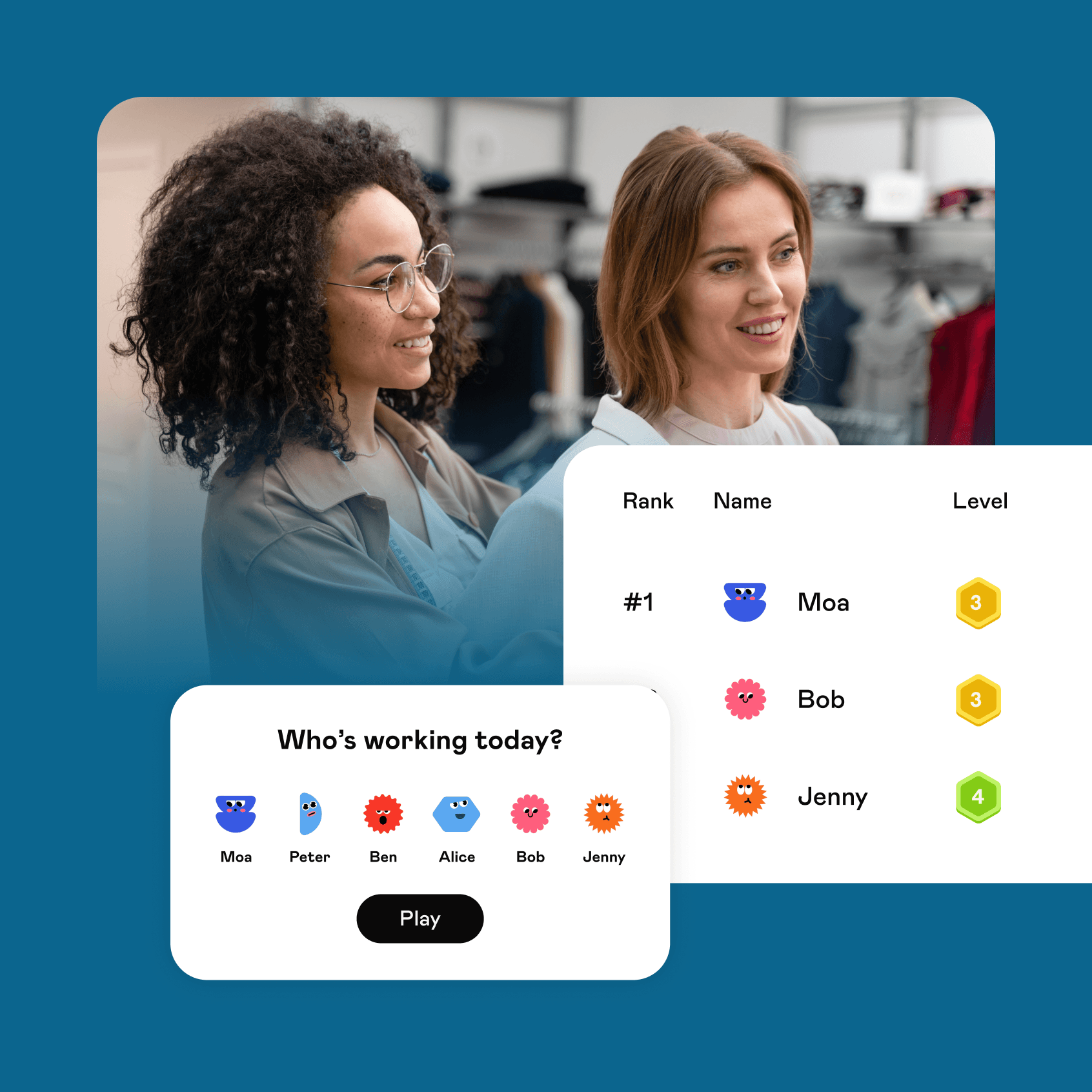
Most retail teams know what they need to do. The challenge is doing it consistently and keeping motivation high, week after week. Traditional training methods rely on repetition and rules, not energy. They explain how to sell but rarely make people want to sell.
Gamification changes that. It turns everyday training into something people look forward to. Something measurable, engaging, and fun. It helps teams build better habits through small, repeated actions that stick.
Why Gamification Works
- It activates motivation: Small wins build momentum. When people complete a challenge, earn recognition, or see their progress, they feel rewarded. That spark of progress fuels consistency.
- It creates instant feedback: Gamification makes improvement visible. Instead of waiting for next month’s results, teams can see their effort pay off daily. When people understand what works, they repeat it.
- It builds teamwork through healthy competition: Leaderboards, team challenges, and recognition make improvement social. The right kind of competition strengthens collaboration and energy across stores.
- It connects learning to real behavior: Gamification is not about abstract points or quizzes. It is about what people say and do with customers.For example:
- “Ask three open questions before showing a product.”
- “Offer one add-on to every third customer.”
- “Practice explaining one product benefit in under 20 seconds.”These small, concrete challenges make great sales habits automatic.
Real-World Example: Jack & Jones
When Jack & Jones introduced gamified sales and service training through Stand, they wanted to achieve three things:
- Increase customer interaction frequency.
- Strengthen focus on conversion and add-on sales.
- Build engagement and learning consistency across stores.
Within just a few weeks, stores that ran daily Stand challenges saw a clear difference:
- Conversion rate grew by 6 percent on average.
- Add-on sales improved across all focus categories, totalling 6 percent increase in basket size.
- Managers reported higher engagement and energy on the shop floor, had more qualitative conversations with customers and saved time from the start.
The difference came from repetition and focus — not from new campaigns or extra incentives.
How to Apply Gamification in Your Store
- Choose one measurable behaviour to focus on, such as “Greet every customer within five seconds.”
- Turn it into a daily challenge that everyone can measure and celebrate.
- Keep it visible with leaderboards, team updates, or a shared challenge wall.
- Celebrate participation and consistency, not just the top performer.
When improvement becomes part of the daily rhythm, sales grow naturally.
Conclusion
Gamification makes learning practical and motivating. It builds energy, confidence, and measurable progress in areas that matter most — customer engagement, conversion, and average basket size.
When sales training feels like a game, people play to improve, not just to comply.